Showing posts with label Law and Criminality. Show all posts

Saturday, April 16, 2011

Reflections.


For the past few months, we have been discussing on the topic of Law and Criminality. It was a very interesting topic to explore, as there were many aspects of it, with very different definitions of it depending on each individual's own opinions and views. We did so many things that it is hard to recollect and remember exactly what we have learned and therefore this reflection is in order, to act as a kind of feedback to myself.

-

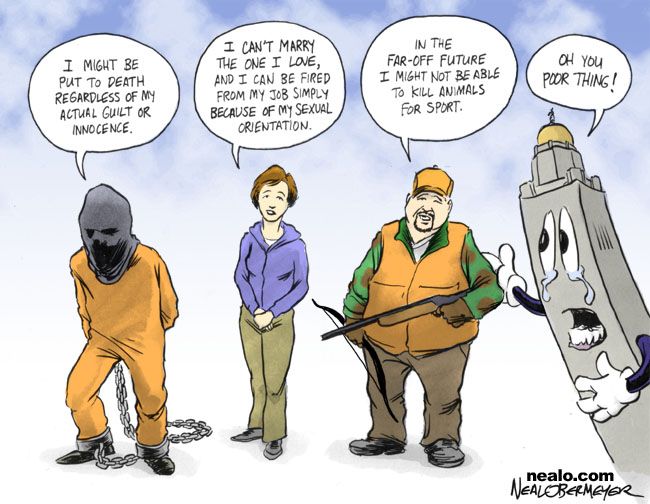
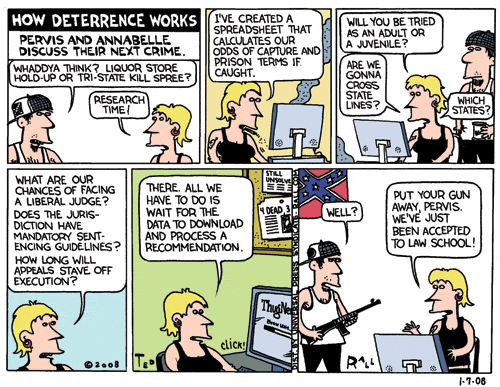
What have I learned? I have learned not to look at a subject just from the surface, but to dig deep and explore, try to uncover other meanings and view it from all other possible angles, not just my own, as others might not view it in the same way. Just like the definition of justice can consist of many things, and my definition of it might not be the same as a criminal’s. Besides that, I have learned a lot about the Malaysian judiciary system and how it works, as well as a thing or two about lawyers and their profession. I have never pondered much about the death penalty before this and so wasn’t really aware of the death penalty abolishment debate. And so the lessons opened my eyes to the arguments for both sides, and specifically about the concept of deterrence and the discrimination involved with the death penalty.


What skills did I use or develop in my learning? I have evaluated the information I received to make sure it is reliable and valid. I also used skills of reasoning to try to understand what I’ve learned. By comparing and contrasting, I've known not to look at things just from one point of view and to learn from other people’s works so as to mend my own.

What I found difficult about the content? I think it’s difficult for me to find an actual stance on this topic, especially the death penalty, as there are so many possibilities, and all the arguments really made sense to me. On the death penalty, although I am FOR it, I always get swayed to the other side whenever I hear their arguments, especially being on the team against the death penalty during the court case, I was contradicting my previous viewpoint and that left me on the fence. After the court case I had to think back and deep to remind myself of the reasons I supported the death penalty in the first place.

-

Three things my team did well in the lead up to trial? During our preparation for the court case, our team was really organised and everyone knew what we were each supposed to do. Everybody was very cooperative and we hardly raised our voices. When there were any concerns we discussed with each other and tried to solve it together.

Three did things my team did well on the day of the trial? I feel that we were communicating with each other very well, through notes and such. We were also constantly giving each other support and encouragement, which boosted all our spirits, and we felt like one well-oiled machine. Most importantly, everybody in the team gave their very best and despite all the questions being thrown at them, despite their questions backfiring, despite the strain about time, we never gave up and continued trying their best.

What I did well before and during the trial? As a cross-examiner, I researched quite a lot on my topic and also formulated questions to cross-examine the other team. So on the day itself, I was quite prepared, although I was rather nervous. I just followed my points and hopefully managed to confound the opposition’s witness.

Group target? As a team, I think that communication between each team member is vital, we should be able to meet up with each other even outside of class to discuss. As compared to the other team, which had meetings almost every lunchtime, our team could not compete with them. Therefore, perhaps our team could try to work together more outside of class.

Personal target? My main weakness is that I always procrastinate and leave things till last minute; thankfully, I managed to complete my preparation for the court case in time. But this is not a good habit, and I hope to get rid of it.

-

On the whole, I have learned a great deal from this topic, the court case, the trip to the Palace of Justice, the visit from Mr. Ramesh the lawyer and Amnesty International were invaluable.

Wen Wen (:

Monday, March 21, 2011

12 Angry Men!


When I first heard that this movie was in black & white, I must admit, my heart sank a little. I don't know why, but I've just got the impression that black & white movies are boring. This goes to show that interpretative perception really affects us. But anyway, this movie has proven that my perception of black & white movies should be thrown out the window. It's hard to imagine a movie being shot in only one set for 90 minutes of the movie, and yet still be so interesting. Therefore, I rate this movie 4 stars, taking into account that it was black & white, and only had one main set.

-

The movie revolves around the tale of 12 men, as they deliberate the guilt or innocence of a defendant, an 18 year old Latino charged of first-degree murder of his father, on the basis of reasonable doubt. At first, when a first vote was held, to see where the jurors stood, it was 11 guilty against 1 not guilty. Juror #8 pleaded that the boy was not guilty, but only for the sake of argument, to extend the discussion, not because he himself thought that the boy was innocent. But as all the other jurors gave their reasons for casting the guilty vote, Juror #8 saw an opening and tries to convince the other jurors to vote "not guilty". In a second ballot, Juror #9 changed his vote from "guilty" to "not guilty", to support Juror #8's cause, not to send a boy to die just like that. 

As the story enfolds, personality and characters of the jurors were revealed, skeptical jurors such as juror #3, to indifferent jurors such as juror #12. Some were pressured into changing their votes, while others truly believed in the boy not being guilty. "Reasonable doubt" it appears, was one that managed to win many jurors to vote "not guilty". It means that if the jurors really believed the boy was guilty then they should vote "guilty", however, if there is one small detail from the evidence that doesn't seem right, or one mistake on the witnesses' part, the jurors should vote "not guilty". But the a few jurors did not seem to get that, and when they realised it, changed their vote to "not guilty". 

Juror #7 did not seem to have opinion on the case, and could not wait to get over with the discussion so he could get out of the place.  He voted at first "guilty" because he figured that most people would vote that and if he voted it as well, the discussion could be quickly dealt with. But as majority started shifting their votes to "not guilty", Juror #7 got impatient and changed his votes too, in order to speed up the process. "I don't know about the rest of 'em but I'm gettin' a little tired of this yakity-yack and back-and-forth, it's gettin' us nowhere. So I guess *I'll* have to break it up; I change my vote to "not guilty." Juror #7 is one who is in my opinion, the true "mean" one, because of his unwillingness to take part in the conversation, he is not inputing any ideas of to the boy's position. Thus, he is leaving the boy's fate to the hands of others, which is worse than those condemning him to death or fighting for him to live, at least they have a reason.

Juror #4 represented the jurors who voted because they thought it was the right thing to do in their opinion, unlike Juror #7. Juror #4 was sceptical about the arguments disproving the evidences and witnesses' statements, but when he himself and his glasses were used as an example to support the disproving theory, he finally believed them and changed his vote. He changed his vote because he was convinced that there was "reasonable doubt", not just because he wanted the discussion to be over with.

-

Best bit? When the jurors manage to find something suspicious about the evidence and the witnesses' testimonies, and through reenacting the scene (the old man hobbling in time to see the boy running out of the house), using the jurors' own personal experience (juror #7 and his spectacle marks), reevaluating the testimonies (woman who saw the scene through the train windows), which made the other jurors doubt their own perception and change their votes.

Favourite juror? Juror #8! For his belief that a human's life should not be taken lightly, for his persistence in persuading the other jurors, and for his keen eye in spotting the truth among the lies.

Wen Wen (:

Wednesday, March 16, 2011

Cyber Bullying


  • Defamation – harm done to a person’s reputation, and slander (spoken) versus libel (written) Slander and libel are both equally damaging as they both cause humiliation and embarrassment to the victim.
  • Whether a statement is seen or heard by a third party or parties It does matter, because some things are only horrible when they are spread among many parties, such as rumours and gossip. 
  • Whether the identity of the target is clear If the identity of the target is not clear, then the person might be simply expressing his overall feelings toward a particular type of person, which is bad but it does not have a direct victim. On the other hand, if the target is clear, then there is a victim which would undoubtedly feel hurt and embarrassed. This would be direct bullying.
  • Anonymity – does it make the perpetrator more or less responsible? By the perpetrator remaining anonymous, this shows what a coward and how irresponsible that person is. The person is still equally responsible and the fact that he/she is anonymous does not make a difference. However, this will definitely affect the feelings of the victim.
  • Harassment – what does it involve? Harassment is basically when a person is made upset, disturbed or threatened by another person. It involves a wide range of offensive acts.
  • Duty to provide a safe work or study environment – what roles do schools and teachers play? By providing a safe environment, only can students and workers study and work effectively and productively. It is also the rights of students and workers to be protected from any form of threats  at school or their workplace. Schools and teachers play an essential role in stopping these threats, as they are the ones in charge and have the authority to reprimand perpetrators.
  • Right to freedom of expression – what limits should be placed on it? Freedom of expression is a basic human right. However, when it creates unrest and chaos among the people, that freedom should be restricted in order to maintain peace and harmony. Discriminatory topics are ones that should be curbed completely, while issues that are controversial, should be controlled as to not get out of line.
  • Right to security of person – should people be protected from written or verbal attacks? I think yes. A person should have the right to be protected from all these, provided the attacks are based on false accusations. If it is the truth however, then the person should deserve it.
  • Defences and confounding factors – what makes a possibly libellous statement okay? In my opinion, no libellous statement is okay or even possibly okay. Unless the person involved agrees with the person who released the libellous statement and feels that it is not offensive or provocative. 
  • Truth – when the statement is accurate If the statement is the truth, then the person involved should just accept it because the person who released it has done nothing wrong, unless the statement is copyrighted and the person who released it had no rights to release it.
  • Fair comment - a legitimate journalistic intent There is nothing wrong with it. The person is merely voicing out his opinion and giving feedback in a way. No offence was intended, and thus it is the person is not in the wrong.
  • “The reasonable person” - how offensive does something have to be before it becomes libellous? When it has truly offended someone and has a major impact on his/her reputation and other people's impression of that person. 

Amnesty for Death Row Inmates?

We believe human rights abuses anywhere are the concern of people everywhere.
So, outraged by human rights abuses but inspired by hope for a better world, we work to improve people’s lives through campaigning and international solidarity.
- Amnesty International


Amnesty International is a worldwide movement of people who campaign for internationally recognized human rights to be respected and protected for everyone. We had the privilege of getting a visit from Miss Davina and Miss Nora, who came to talk about the abolishment of the death penalty. There have been many arguments revolving around this topic and I must admit that I was not really in favour of the abolishment. However, I still listened to the presentation with an open-mind.

In my opinion, I think that the death penalty is here for many reasons. To act as a punishment, and as a deterrent as well. But the most important of all, I think, is that it is a safe and infallible way of ensuring that person does not commit the same crime again, eg: murdering and killing. If you put a man in prison, when he gets released, who is to say that he will commit the crime again? Who is to say he is not gonna rob and steal again? Who is to say that he is gonna rape and murder again?

-


The main reason Amnesty International argued for the abolishment of the death penalty is due to the 3rd article in the Universal Decleration of Human Rights. Yes, I do agree with that statement. Everyone should have the right to life, but when that person has taken another life, is that right still rightfully his? Thus I still feel that in certain cases, it calls for an exception. Such as when by taking a life, we are saving a thousand others. Isn't the lives of thousands of innocent people more significant than the life of a puny convict?

-


Death penalty is irreversible and claims innocent victims. They can never be brought back to life.

When I first heard this, I had a sudden waver in my judgement. I thought that it was so true. That once people were dead, it was irreversible. That an innocent life would be lost just like that. But then, as I delve deeper, I realised that this was not a fault of the death penalty itself, but rather something simple that would almost be impossible to eradicate, human error. If a person was to be wrongly convicted, and he had received 20 canes as his punishment, but then it was found out that he was actually innocent, would the torture and humiliation he went through be reversed? NO. The ramifications might be very much more severe, but still, emphasising the word "irreversible", it applies to this and many other situations as well. If humans could be a hundred percent efficient, this problem wouldn't even have to exist at all. But then alot of other crisis would not have existed either.

-


Death penalty is discriminatory and is often used disproportionately against the poor, minorities and members of racial, ethnic and religious communities.

This, I feel, should not be an impediment to the execution of the death penalty. Because again, it is the fault of humans. Not the punishment itself. The person who determines who is executed is the one who is guilty. These people have abused their power and the law, which is a serious offence in itself. Let's just say a judge disliked black people, and he had simply sentenced an innocent black person to 50 strokes of caning, should we abolish caning then? Because it is used disproportionately?

-


Death penalty is a cruel punishment.
How cruel is death actually? The road leading to death might be cruel, inhumane, ruthless, painful, but death itself, what does it mean? Everybody dies eventually. So it's actually just dying a bit earlier. In fact, the death penalty allows the criminal to escape from the world of suffering. Compared to life imprisonment, where the criminal would be held captive behind bars, waking up everyday only to be aware that his freedom is lost, cut off from the outside world, a quick, painless death, and it will all be over. So, the death penalty. Cruel? Or not?

-

Numerous studies have shown that death penalty has no deterrent effect.
Well, I don't know how criminal minds operate, so my thinking might be different from theirs. But if I were a drug smuggler, and I found out that the punishment for drug trafficking was death, I would definitely think twice before trafficking drugs again. I feel that the reason why studies have not shown the effectiveness of the death penalty as a deterrent, is due to other uncontrollable factors. Such as in science, where an experiment is only considered fair and valid if all the controlled variables are controlled. Thus, factors such as the strictness of the authority of the particular country, might have influenced the deterrent effect of the death penalty. So I remain neutral about this point.

-


However, I strongly disagree about the point made to go against the abolishment of the death penalty, which is that the death penalty is CHEAPER. Although it is a very serious issue which is being considered by governments, as Mr James pointed out, I can't help but find it ridiculous. How can we put a price tag on a person's life? In that case,  we should just hang all the inmates, so there will be no more need for prisons and thus save billions of money! The reason for authorities to order an underserving punishment is because it saves money. That I seriously can't comprehend. It's money against humanity, money against justice, money against all things worthy. But as they say, "Money makes the world go round", so there must be some mighty reason why people put money ahead of everything else.

-

Forgive me for being sceptical, but I do not feel that Amnesty had made any points which could possibly even change my mind, except for that thing about the mandatory death sentence and that people deserve a second chance. Therefore, I think that the death penalty should not be abolished, but rather amended and revised, so as the mandatory death sentence would no longer stand, as it would be major injustice to those who are in actual fact innocent. I also is in agreement that people deserve a second chance, so there could be perhaps a rehabilitation period, in which the convict would be given a chance to redeem themselves. However, if the efforts appear fruitless, as the convict shows no sign of remorse or regret, then the execution should be carried out. That way, there will not be a chance of them escaping and creating more havoc, and claiming more victims. I also feel that not all criminal acts are deserving of the death penalty, only ones that involves the life of another, or huge amounts of victims. So laws should amended in that sense, to make sure that the death penalty does not execute its job "too well". 

Wen Wen (:

Tuesday, March 8, 2011

Wednesday, March 2, 2011

Palace of Justice!


Dear bloggie,

On 24th February 2011, My friends from Year 10 and I went on a trip to THE PALACE OF JUSTICE!  It was an awfully nice place, it looked like a high class hotel. Anyway bloggie, we had the opportunity to sit through an actual court case, which was really interesting, although i was kind of hoping for a criminal case. We went in halfway through and I could hardly grab what they were saying, except for a few words like "law suit" and "mental illness". Luckily I had friends to explain to me about it :)

Through this trip, I have learned a lot about Malaysia's judicial system. It really enlightened me on the way the laws work. The Q&A session was especially beneficial as the very kind lady thoroughly explained and answered most of our questions. But what truly surprised me bloggie, was when the very kind lady told us that juvenile delinquents were exempted from being sent to prison, and were sent to this school, Henry Gurney School, instead. What's more, when they "graduated" from the school, they would have a totally clean record, not a single trace of dirt. And the way the very kind lady said it, it sounded like Henry Gurney School was the ultimate heaven for kids with attitude problems. Now bloggie, I don't know if it is just me, or does this sound wrong. I mean I've watched movies and all, and I know for a fact that if a bunch of juvenile delinquents were to be locked up in one single place, things will not look good.

Another thing that was constantly nagging me is that thing about diplomatic immunity. Seeing as that we had a couple of diplomats' kids in our class, I did not take this lightly as I would have a couple of months ago. There was confusion on whether those in our class with diplomatic immunity could commit a crime and get away with it. But after some clarification from the very kind lady, we found out that their country of origin could still charge them on that offence. Ain't that a relief bloggie? But I still to shudder to think of what could happen if their country refused to charge them. Let's not go there shall we?

The Palace of Justice also had this amazing library, with every kind of law book you could possibly find!  Although I must admit that I was not particularly excited about going through pages and pages of words and no pictures on law, the amount of information stored in the library is one I truly admire. The museum, as I think it is called, also featured many real life examples of the "world of law", from testaments to judges' black robes.

All in all, the trip was extremely fun and meaningful. It was such a privilege one of the few civilians to visit, and not to mention the first school ever to step foot in to the Palace of Justice. What an honour :D

That's all for now, bloggie.
Teehee,
Wen Wen (:

Monday, February 21, 2011

Punishment For The Criminals!


1. Driving under the influence of drugs
2. Drink driving
3. Shouting racist abuse
4. Breaking into a car
5. Shoplifting
6. Being sold alcohol in a bar whilst under the age limit
7. Solvent abuse
8. Doing a paper round at the age of 11
9. Picking a fight
10. Urinating against a wall

Jacelyn and I have ranked the offences from 1 to 10 according to the severity of it, with 1 being the most serious and 10 being the least serious :P

-

Which of these are crimes?
Technically all of them.

Which of them, if any, are victimless?
Solvent abuse (technically) because the only victim is yourself.

What kinds of punishment would you give to these offences?
Urinating against a wall 
- community service and pay fines (depending on the owner of the wall)

Driving under the influence of drugs 
- prison of up to 30 years (depending on the level of intoxication and the number of fatalities eg: banging somebody and killing that person or just crashing into a pot of plant)

Shoplifting
- for kleptomaniacs, probably seeing a psychiatrist and going for counselling.
- for a normal person, depending on the value of the stolen items eg: for a piece of gum probably just pay back the original price of the gum and apologise to the owner, but for expensive jewelry, jail sentence

How should repeat offenders be dealt with?
Generally, increasing the severity of a punishment to repeated offenders. However, depending on the situation/crime, rehabilitation would be an option.

teehee,
Wen Wen (:

Wednesday, February 16, 2011

Law and Criminality!


Law.
A simple 3 letter word. Yet it brings about so many different meanings.
Ever since the birth of the universe, there has been a multitude of laws, fundamental principals that make the universe what it is. The law of gravity, the law of thermodynamics, the law of motion. The unalterable laws that bind us together.  It allows everything in the universe to run smoothly without much hiccups. Without it, planets would collide, stars would explode, and Earth, our precious Earth, would cease to exist.


Back on our humble planet, we need rules and regulations too. In order to keep order and maintain peace, laws are necessary. Therefore, we humans have come out with a set of laws for other humans to follow and not cause chaos. According to wikipedia, 
Law is a system of rules and guidelines, usually enforced through a set of institutions. 
Most laws are just plain common sense, there to protect us from ourselves, such as traffic laws. Do not speed, follow the traffic lights, do not drink and drive. What would happen if we did not follow these set of rules?


We would go *bang*, *crash*,  *BOOM* and die. Not only that, we might also bring others down together with us. In this sense, humans are so dumb, that we require a set of rules to remind us not to kill ourselves. Funnily enough, it has never crossed our minds what would happen if we were to lose control of the car. On the other hand, we're always worrying bout getting caught by the traffic police and having to pay the fines. Ironic, isn't it?


"Reason is the life of the law, nay the common law is nothing else but reason." 
SIR EDWARD COKE, Institutes: Commentary upon Littleton
-

The law also prevents people from doing things that harm other people, such as murdering, obviously, and stealing, and smuggling, and raping, and the list goes on and on. Imagine if there were no laws, people would be free to do anything they want and I do mean anything!  What then, would happen to our rights and equality? If everybody were allowed to steal, and there's nobody to catch them for it, then everybody WOULD steal. And if everybody steals, then who is there to actually work hard and earn money the right way? No one! At that time, the concept of money would be totally useless, because there are no goods to buy them with in the first place, because everybody is busy stealing money! The world will become a place where the most successful person would the best thief. And at that, since nobody is working or doing something other than stealing, the world will not progress. And as our food supply and resources start to deplete, humans would still be too selfish to actually start planting crops because they know that it will only get stolen away! And soon humans will die out, starving one another because of our unwillingness to do things the right way. Animals, without humans oppressing them, will rule the world. Okay I know this is kinda exaggerating, but you get my point right? You do right? Do you?

-

Well, the idea of law is nice, very nice indeed. Through laws our rights are preserved, justice is served. It punishes those who have wronged, and protects those who are innocent. However, is it all what it seems? There are people out there who do not like laws, they feel that through laws, they are restricted, their freedom limited. Take skating in the corridors for example, it is not in the law, but I bet schools have that rule, don't they? So why don't they let students skate in corridors? Hmm, I'm not sure really, but I think it would be because the school is afraid of students skating and knocking over other little students. Well, anyway, the students will think that this is unfair, as what are the chances of them knocking down some little kid? This would be a case when a rule can be arguable, and there is actually no right or wrong.


"It's arguable that even if legislation is enacted beginning in October, it may be too little, too late for a couple companies in this group, ... bogged down in all the political battles that are undoubtedly going to be held on the drug debate."
Charles Lynch

The implementation of the law I would think, is the one that would truly determine justice. But who determines what the law should consist of? Who defines what is right and what is wrong? Who decides the severity of the crimes? Different people have different views on what is they deem good and bad. Examples to ponder on:
  1. Human sacrifice - Is it right, when you are taking somebody's life? Is it wrong, when you do it for your religion?
  2. Slavery - Is it right, when freedom is taken away? Is it wrong, in a world where the strongest rule?
  3. Cannibalism - Is it right, when killing is involved? Is it wrong, when there are no other alternatives?
  4. Prostitution - Is it right, when it goes against ethics? Is it wrong, when it is done willingly?
-

It seems like "the person" who controls the law will be like God on earth. Through law, he is given the power to punish. And if the person controlling law were to be let's say, corrupted and selfish? Laws passed would be unjust and only serve the purpose of that person. This would be very very unfair. But because it is law, you have to follow it, or suffer. Is this justice? Does it create peace? Does it protect our rights? No.


"An unjust law is itself a species of violence. Arrest for its breach is more so."
Mohandas Gandhi
When people think of law, they usually think of the court. And I must agree, that justice is usually determined within these walls. But the jury are still humans, and we humans, being complicated creatures, take into account every factor that could be used to our advantage. Thus humans' sense of judgment is usually affected, whether they like or not,  by emotion and prejudice. This causes them to give unfair judgment. And also, in court, both sides are represented by lawyers. So does it mean that if a murderer gets a really really good lawyer, and the court decides he is not guilty, is he really not guilty?

"A jury consists of twelve persons chosen to decide who has the better lawyer."  
Robert Frost

"Justice cannot be for one side alone, but must be for both." 
Eleanor Roosevelt 


-

Humans have laws to keep order in the world, laws have humans to mess it all up again.


teehee,
Wen Wen (: